

Author: Julia Blömer
Published on:
Updated on:
🎤 Listen to the blog post (by "Lena", AI voice):
Short version:
„I always have to be strong!“ – Causes and background:”
Chapter 1 – Shedding the Armor: Recognizing Invisible Wounds and Allowing New Perspectives
Chapter 2 – Tearing Down the Castle: Questioning Protection Mechanisms and Enabling Closeness
If you notice that conversations remain superficial and you rarely express your needs, it's a sign that your defense mechanisms are limiting you rather than protecting you. Old hurts and the fear of further disappointment reinforce this withdrawal. Open communication is key to bridging the gap.
To break through unhealthy emotional distance used as a defense mechanism:
Chapter 3 – Redesigning your life in the castle: Transforming helplessness into strength and creating a pleasant coexistence
Do you want to break down old protective walls, allow more closeness, and grow into a strong mother? Then my Self-study course „Strength in vulnerability“Just the thing for you:” https://fidertas-awareness.com/produkt/emotionale-distanz-zur-tochter-ueberwinden/
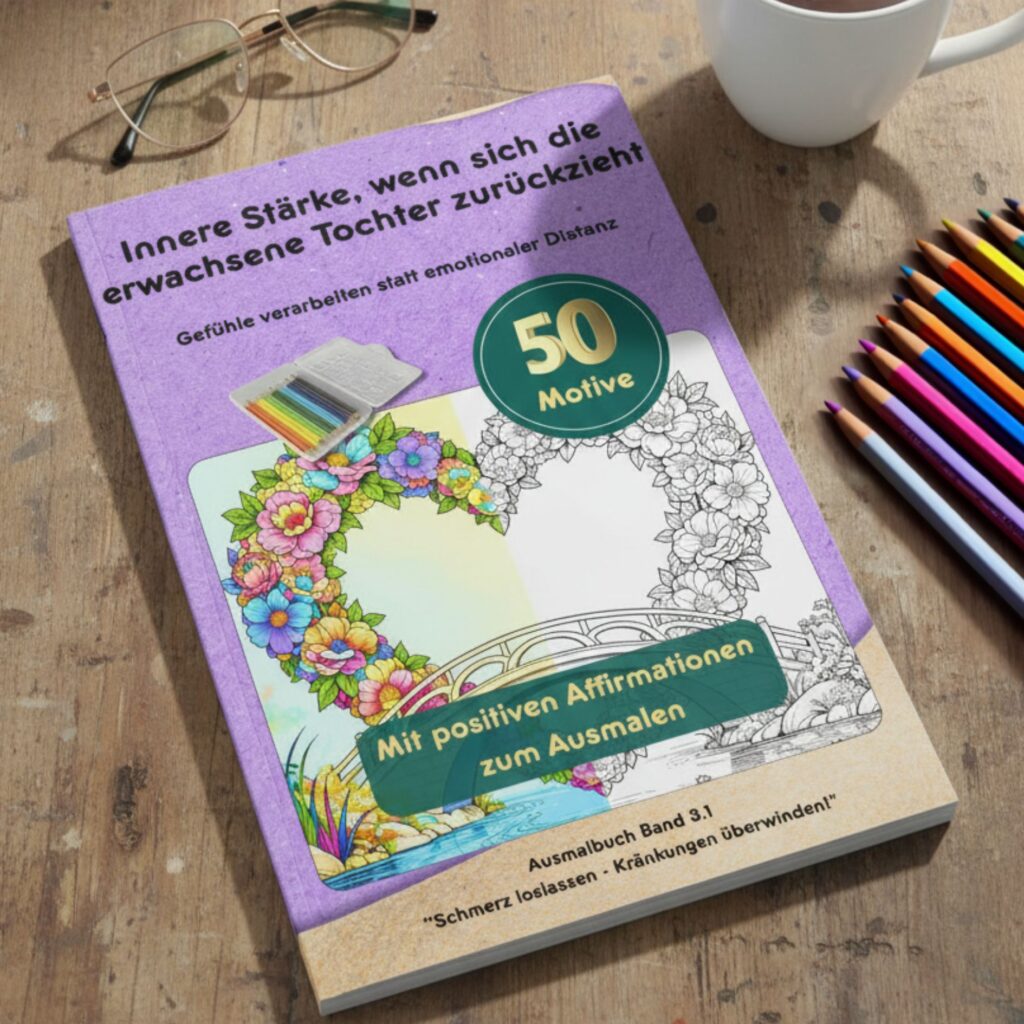
Or use this unique coloring book „Inner strength when the adult daughter withdraws: processing feelings instead of emotional distance„"This coloring book accompanies you on your journey to mindfully perceive your feelings and find inner peace. It supports you in staying connected to yourself, even in difficult moments, and in drawing inner strength.".
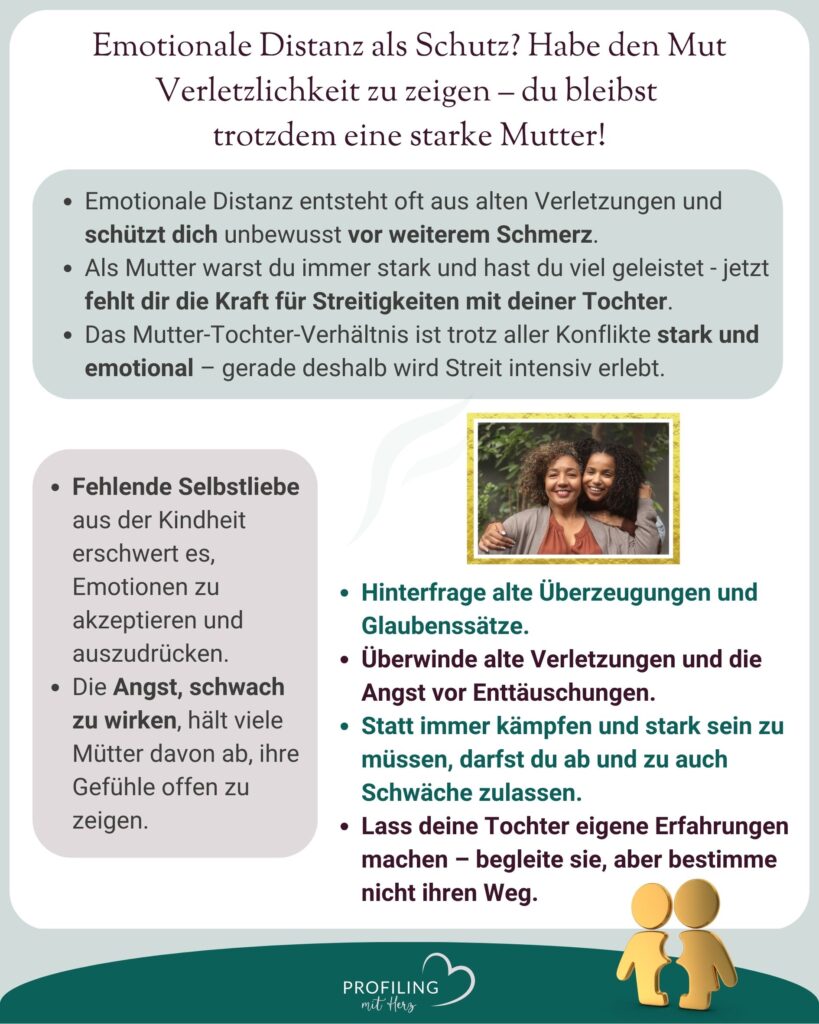
Many women know the feeling of always having to be strong. Especially as a mother, you want to be there for your family, provide support, and not show any weakness. But what happens when you constantly suppress your feelings?
Emotional distance as protection It's a mechanism that can provide short-term security. But in the long run, it leads to loneliness and misunderstandings in your relationships – with your children, partner, friends, and the people around you.
Petra and her adult daughter Sabrina
Over the past few years, my relationship with Sabrina has become so complicated that I no longer know how to deal with it. On the one hand, I feel a deep love for her, but on the other hand, there are so many conflicts and hurts that are driving us apart.
I feel like we're both walking on a minefield. Sabrina has laid so many "mines" that I'm unsure what I can say or ask. But I can also sense my adult daughter's insecurity.
In my opinion, Sabrina is unable to manage her own life. Therefore, I still take responsibility for many of my 33-year-old daughter's decisions. Unfortunately, this only exacerbates our mother-daughter conflict. But I'm probably also part of the problem because of that, unconsciously laying my "mines"...
This burden and responsibility I carry is overwhelming, and I don't want it. I have many issues I struggle with every day. And yet, I've learned to always be strong and there for others.
Feelings were always out of place for me. Whenever I showed emotions or vulnerability to my own mother, I was punished. And the sparse love my mother showed, which I so desperately needed, was simply withdrawn from me.
Why is it so difficult to show feelings?
Petra learned as a child that showing weakness leads to punishment or withdrawal of affection. No wonder she struggles with this today. emotional vulnerability to show.
A mother needs to learn to accept her own personality – with all its quirks, flaws, and emotions. She knows that she doesn't always have to be strong! And that true strength lies in allowing herself to be vulnerable sometimes.
Only then can a good, respectful relationship on equal terms between mother and daughter flourish – honest, vibrant and with security on both sides.
Emotional distance often stems from old wounds and serves as an unconscious defense mechanism for many mothers. But it can quickly become an invisible wall that prevents closeness and genuine connection.
Imagine standing before your daughter, seeing her, yet a glass wall separates you. You love her – and yet something divisive remains. Many mothers experience this with their adult daughters. The reason you can't express your feelings often lies deep in your past.
Perhaps you learned early on that being strong in life means not showing weakness. If you lacked comfort, security, or understanding in your childhood, you can quickly build up an inner wall of protection as an adult. Especially after experiences like violence, trauma, or hardship, emotional distance becomes a survival strategy. It helps you block out pain and remain capable of acting.
But this protection comes at a price. If you constantly withdraw because you're afraid of getting hurt, genuine closeness with your daughter will suffer. Typical triggers are arguments, misunderstandings, or the feeling of not being understood. In such moments, you shut down internally and no longer want to show your feelings. Even your Daughter withdraws and becomes estranged that means from you.
There are phases in life when you feel like you've already fought too many battles. Perhaps as a mother, you've had to constantly assert yourself – at work, in your family, in relationships, and in social roles. You've carried responsibility, solved problems, and pushed yourself beyond your limits.
Now that your daughter is an adult, you feel you lack the strength for further conflicts. The lifelong struggles have taken their toll.
Instead of repeatedly engaging in discussions or conflicts, you withdraw emotionally. This isn't a sign of weakness, but usually a silent cry for help from your soul, a longing for peace and mental tranquility. Over the years. always having to "function"., It's draining. Eventually, your inner energy reserves are depleted.
Pay attention to warning signs:
Then it's time to question your inner walls. Setting boundaries as self-protection is important, but it shouldn't lead to isolation. Being strong in life doesn't mean always building a wall around your heart. Sometimes the greatest courage lies in allowing yourself and others more closeness again.
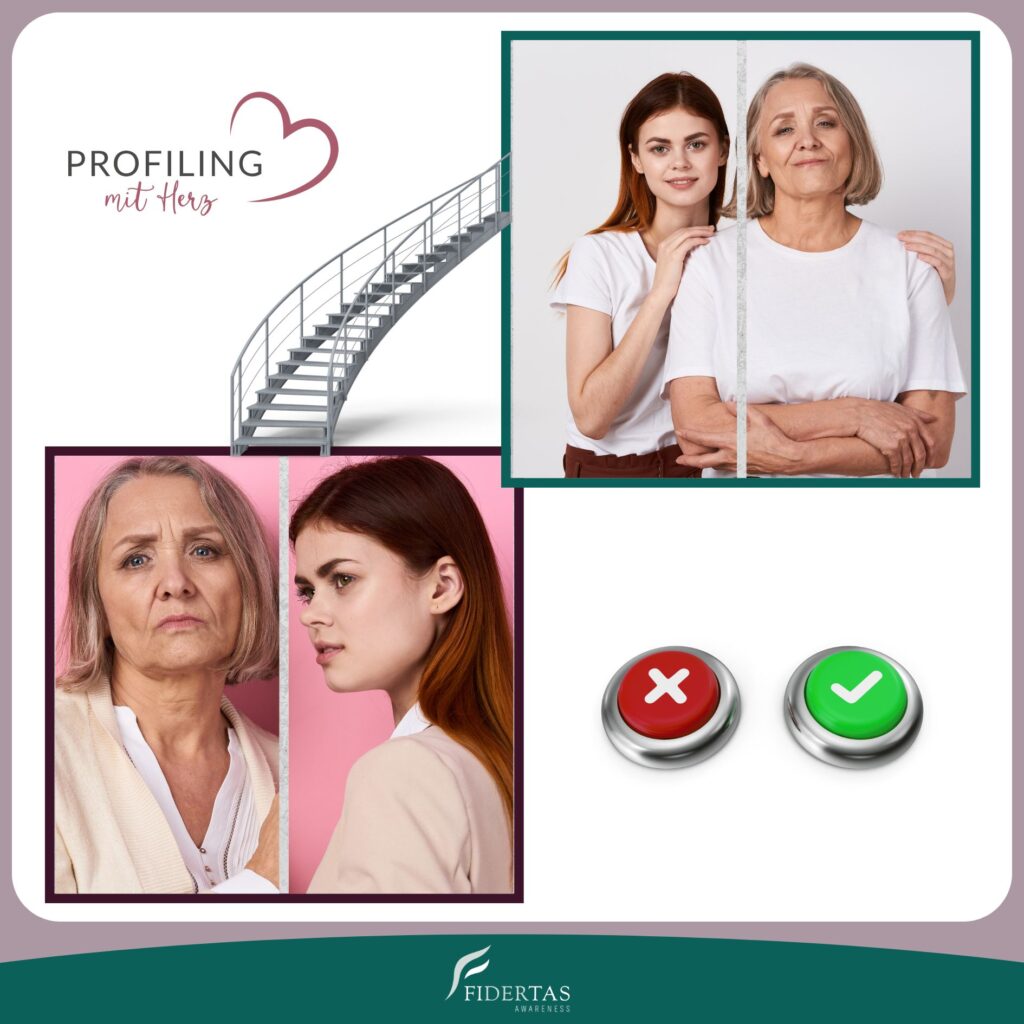
How we show or hide our feelings is strongly influenced by our upbringing and societal expectations. Women often grow up with the ideal image of the "strong mother" who is always there for her family. Weakness and vulnerability are not to be shown. These deeply ingrained patterns give you the feeling that you are not allowed to express your emotions.
Another aspect is the lack of self-love that many women develop in childhood. If you don't value and love yourself enough, you'll find it difficult to accept and express your emotions. This inner block can persist to this day and influence your relationships, especially with your adult daughter.
The fear of being vulnerable is a key factor preventing some women from showing their feelings. This fear can stem from various sources:
This fear can lead you to emotionally distant, to protect yourself. But this distance can ultimately strain your relationship with your daughter and permanently damage the trust between you.
The relationship between a mother and her adult daughter is very strong and therefore usually very emotional. This leads to arguments being perceived and fought out more intensely.
As a mother, you often feel responsible for your adult daughter's well-being. This burden can be overwhelming, especially if you feel that your adult daughter cannot manage her life on her own.
By finding the courage not to react in every situation having to be strong, You create a deeper connection with your daughter. You remain a strong mother who is not only there for her family, but also takes care of herself.
In cases of (severe) trauma and profound emotional wounds, it is essential to seek professional help. If you are suffering greatly from your experiences, don't hesitate to seek support from Therapists or to seek out psychologists.
Seeking help is a courageous and important step on the road to recovery.
„"Be gentle with yourself. Nobody goes through life without stumbling.".“ – Charlie Mackesy
Only when you shed your emotional armor and expose your hidden wounds can you allow true intimacy. And grow as a strong mother – because Being vulnerable is not a sign of weakness., but of courage.
Perhaps you know the feeling of always having to "function". You take care of the grandchildren, settle family disputes, keep in touch with everyone, and make sure that everyday life runs smoothly. In doing so, you've learned to put your own feelings aside.
Emotional distance While this defense mechanism might protect you from hurt in the short term, in the long run it isolates you from your feelings. And from the people around you! Old conflicts, disappointments, or a lack of recognition have left their mark. These invisible wounds make it difficult for you to show emotional vulnerability today.
But this armor becomes heavy over time. While it protects you from new injuries, it also prevents you from..., to allow genuine closeness.
Perhaps you sometimes feel lonely or misunderstood, even though you're always there for others. This is precisely where the journey begins: by acknowledging that you too have vulnerable sides and don't always have to be strong.
First steps to opening up your emotional world:
This step alone helps you to recognize your needs and not define yourself solely by performance and strength.
Imagine taking off the protective helmet you've worn for years. Suddenly, your vision is clear, revealing new perspectives.
Many women take on responsibility early and believe they always have to be strong. The reason why you can't show your feelings often lies in... old beliefs:
Such beliefs shape one's behavior and lead to hiding your true self behind an emotional helmet.
To break these patterns, it helps to question beliefs:
Replace limiting beliefs with empowering alternatives. For example:
These new perspectives will help you accept yourself and live authentically. As a strong mother who is no longer afraid to show her softer side.
Only when you question your castle as a place of protection and gradually dismantle the separating walls and moats can you allow true closeness. Old wounds can heal, and you can grow as a strong, yet vulnerable, mother.
Perhaps you've built up a strong wall around yourself over the course of your life. Emotionally isolating yourself helps protect you from further hurt.
Have you noticed for years that you withdraw from conversations as soon as conflicts or critical topics arise? This is a sign that your defense mechanisms are active and are gradually isolating you.
How you know that your castle wall no longer protects you, but makes you lonely:
Straight verbal abuse Old wounds are often reopened. Instead of shutting down, you can learn to react differently:
To break old patterns, it helps to consciously perceive your feelings. Practice naming them: Are you sad, angry, disappointed, or anxious? Write down when you react particularly sensitively – often it's old emotional triggers that put you on the defensive. The better you know your feelings, the easier it will be to find new ways of dealing with them.
Exercise:
Take a week and write down the following each evening:
This way you can recognize patterns and work specifically on allowing emotional vulnerability.
(Nonviolent) communication This is the key to overcoming emotional distance. Many misunderstandings arise because feelings are not openly addressed. But how can we reconnect?
Practical tips for greater understanding and connection:
Step by step towards greater closeness:
Exercise for open exchange:
Meet regularly and take turns answering the questions:
Trust is the foundation for genuine intimacy. If trust is weakened, it won't be rebuilt overnight.
Small rituals and habits can help you rebuild a familiar and close connection:
Trust grows when you let go of control. You don't always have to be in control or appear strong. Being strong in life also means allowing yourself to be vulnerable and to trust your daughter, To go your own way. The more you let go, the more space is created for genuine closeness.
You can transform feelings of helplessness and powerlessness into new strength if you leave old defense mechanisms behind and create an open, trusting relationship with your daughter.
Sometimes you feel like a knight who constantly has to fight – against expectations, against being overwhelmed, against the feeling of never being enough. Especially as a mother, you've learned that you always have to be strong. Never show weakness and never let your feelings show.
feelings of Powerlessness and being overwhelmed These feelings are not a sign of weakness, but rather an indication that you are reaching your limits. Allow yourself to feel and accept these emotions. They show you where you need to take care of yourself.
A strong mother is allowed to be vulnerable and take her needs seriously – you don't have to do that. Feelings of guilt have.
To draw new strength from helplessness, it helps to recognize your own – often excessively high – expectations. Ask yourself honestly:
When you relax these expectations, you create space for relief. You can delegate tasks, accept support, and trust your daughter to find her own way. This takes the pressure off you and gives you both new freedom.
From now on, you can finally rebuild and redesign your fortress: Instead of high walls and a large moat, you'll now have green meadows at the entrance with low walls. People are welcome to enter the fortress via your bridge, but you also have the right to raise the drawbridge again for a while.
Self-care, self-love And personal development then forms the foundation for genuine emotional closeness. Self-care means taking yourself seriously – not out of selfishness, but out of love for yourself and your family.
This is how you strengthen your emotional vulnerability and gradually become more open to intimacy. You learn that you don't always have to be strong. Being strong in life also means seeking support and treating yourself with compassion.
A true relationship on equal footing arises when you both respect each other's needs and give each other space. This also means allowing your daughter to make her own decisions – even if you sometimes disagree or are worried.
Your role as a mother is to guide her, not to dictate her path. You can instill values in her, encourage and support her, but you cannot protect her from everything.
Everyone has to overcome their own challenges to develop self-confidence and inner strength. If you trust your daughter to find her own solutions, you give her the most important foundation: self-confidence.
Imagine your daughter is like an airplane. In the hangar, she's safe, protected from the elements. But that's not what an airplane was built for. It's meant to fly, discover new horizons, sometimes experience turbulence, and land safely again. Even if the thought of storms or detours is unsettling, it's only through flying that your grown daughter unfolds her true strength.
By you let go And by trusting her, you relieve yourself of pressure. You don't always have to control everything or be responsible for everything. At the same time, you strengthen the bond between you because she feels: "My mother believes in me!" This creates a relationship full of respect, trust, and mutual appreciation.
Do you want to break down old protective walls, allow more closeness, and grow into a strong mother? Then my self-study course „Strength in vulnerability“Just the thing for you:” https://fidertas-awareness.com/produkt/emotionale-distanz-zur-tochter-ueberwinden/
In this unique course You will learn how to:
The course It offers you practical exercises, inspiring insights, and everyday methods to discover your emotional vulnerability as a new source of strength. You set the pace – and can access the content at any time.
Do you know that feeling when there's a rift between you and your adult daughter? Silence and misunderstandings stand?
This coloring book will help you to calm down, to lovingly perceive your feelings and to find new strength. With 50 varied motifs and empowering affirmations You will become more relaxed and You feel the connection to yourself again..
Sentences like „I am valuable and deserve respect.“" or "„I trust my inner strength.“ work deeply on your subconscious mind and give you inner strength.
About the following Amazon link You can view and order it here: https://www.amazon.de/dp/B0G5JTSNKD
The path to true closeness begins where you question your emotional distance as a form of protection and dare to show vulnerability.
Every mother knows moments when she feels she always has to be strong. But no one can or should always carry everything alone. When you open up and share your feelings, you create space for trust, understanding, and a new way of being together. This way, you grow not only as a strong mother, but also as a person.
Share your experiences and inspire others!
How did you experience emotional distance as a form of protection? What helped you to feel closer in the Mother-daughter relationship To allow it? Feel free to share your thoughts in the comments. Together we can learn from each other and discover new ways to overcome emotional distance.
Want to delve deeper? Then use my Self-study course or Let yourself be personally guided. Together we will find out how you, as a strong mother, can overcome the conflict with your adult daughter with more openness and connection.
Dare to show vulnerability – and discover how much strength it holds!
Your Julia
Disclaimer: This text is for informational purposes only. If you are experiencing trauma, please seek advice from an expert (e.g., a therapist, counselor, or other professional). Therapists).
All images and 3D elements used in this post are from Envato Elements and are used under a valid license.
KeywordsEmotional distance as protection, strong mother, showing vulnerability, being strong in life, not being able to show feelings, vulnerability in emotional matters, not being able to show feelings as a cause, one cannot always be strong, emotional vulnerability, always having to be strong, not showing weakness.
Sources / Links (without Wikipedia)
Ashoff on September 8, 2021 at 11:01 AM Dear Susanne, N. (2023, September 11). Stop always wanting to be strong.. Nima Ashoff – Hundreds of happy souls instead of being incredibly stressed. https://nima-ashoff.de/stark-sein-wollen/
Deissler, N. (2024, April 12). Allowing closeness – difficult?. Nina Deissler – authentically attractive. https://ninadeissler.de/naehe-gelassen/
Understanding emotional distance: Ways to greater closeness and connection. Dr. Alexander Scholze. (2025, May 8). https://alexander-scholze.de/emotionale-distanz-verstehen/
Franke, S. (2025, April 11). Overcoming emotional distance: Why silence makes you lonely . Psychotherapy Frankfurt. https://frankfurt-psychotherapie.org/emotionale-distanz-ueberwinden-warum-schweigen-einsam-macht/
Grabow, D., & Grabow, F. (2025, May 17). Emotional distance in the relationship – Re-establishing closeness. Grabow Beratung. https://www.grabow-beratung.de/themen/emotionale-distanz-in-der-beziehung-wieder-naehe-schaffen#:~:text=In%20unserer%20Beratung%20sehen%20wir,dass%20sie%20sich%20emotional%20zurückziehen.
Grün, A. (2022, April 11). Three ways out of powerlessness: Transform destructive feelings into positive ones!. FOCUS online. https://www.focus.de/gesundheit/ratgeber/psychologie/gastartikel-von-deutschlands-knownestem-moench-bei-ohnmacht-oder-todesangst-verwandeln-sie-detreibe-gefuehle-in-positive_id_82098713.html
Keller, Dr. N. (2025, May 26). Why showing weakness is a sign of strength. LadiesDrive.World. https://ladiesdrive.world/online/warum-schwaeche-zeigen-von-staerke-zeugt/
Kuhn, G. (2025, May 11). Mother-daughter relationship: It's complicated!. Kurier homepage. https://kurier.at/wissen/muttertag-eva-maria-zurhorst-toechter/403039626
lkl. (2023, August 7). How to recognize the signs of verbal abuse and protect yourself from them. brigitte.de. https://www.brigitte.de/liebe/beziehung/psychologie–5-anzeichen-verbaler-gewalt–die-wir-zu-oft-kleinreden-13554096.html
Matijasevic, A. (2025, May 10). Why the mother-daughter relationship is often so complicated. Swiss Radio and Television (SRF). https://www.srf.ch/kultur/gesellschaft-religion/zwischen-fuersorge-und-freiheit-warum-die-mutter-tochter-beziehung-oft-so-kompliziert-ist
Sabater, V. (2023, January 6). 7 signs that you had to suppress your feelings as a child. Thought World. https://gedankenwelt.de/7-anzeichen-dafuer-dass-du-als-kind-deine-gefuehle-unterdruecken-musstest/
Siemann, L. (2025, July 1). Mother & Daughter: How to build a good relationship.. AllyTime. https://allywell.de/blog/mutter-tochter-gute-relationship
Stauner, G. (2024, February 17). Letting go: When children go their own way. good news for you. https://goodnews-for-you.de/loslassen-wenn-kinder-igen-wege-gehen/

Mental & Mindset Coaching

Find serenity and inner peace: Hobbies for adult women that relax and inspire!
Emotional distance as protection? Have the courage to show vulnerability – you'll still be a strong mother!

Why is it so hard for us women to say "no" without feeling guilty? Even a river needs banks!
TAKE ADVANTAGE OF OUR FREE TIPS AND INSPIRATION!
THEN PLEASE SUBSCRIBE TO OUR NEWSLETTER

E-book
„"THE POWER OF CHANGE"“

The free e-book "The Power of Change: 5 Strategies to Successfully Replace Negative Habits" is a valuable tool that will help you identify negative habits and replace them with positive behavior.