
Author: Julia Blömer
Published on:
Updated on:
Short version:
Different types of personal boundaries:
The role of education in setting boundaries:
Why is it so difficult for us women to say "no" without feeling guilty?
Psychological reasons why you can't set boundaries:
Negative consequences of not setting boundaries:
If you need support, please feel free to sign up for a free initial consultation on. Or just look in our shop, to see if there's something suitable for you.
Click here for part 2 „"Your 4-week plan: Learn to set loving boundaries – become a rock in the surf step by step!"“: https://fidertas-awareness.com/liebevoll-grenzen-setzen-lernen/

Imagine a river without banks. Its water gushes uncontrollably in all directions until it finally seeps away and disappears. That's exactly what happens to us when we don't set boundaries. Boundaries are our anchor – they define our values, protect our well-being, and give our lives clear direction.
Why is it so difficult to decline "requests" from others?
Many people – especially women – have difficulty, „to say "no". This is less due to a lack of selfishness, but often to formative experiences in childhood.
Even today, girls are often raised to be exclusively helpful, to avoid conflict, and not to set boundaries. This socialization makes it difficult for them to establish clear limits.
Setting boundaries is self-care, not selfishness.
Feelings of guilt or the fear of disappointing others often prevent us from saying "no." But setting healthy boundaries is not a sign of selfishness, but of self-care. Healthy boundaries protect against emotional exhaustion and help us lead a fulfilling life.
Say "yes" to yourself
Ask yourself honestly: „Why do I find it difficult to set boundaries?“Listen to your inner voice and don't say "yes" when your heart says "no." Clear boundaries give you inner strength, serenity, and self-respect. You are worth making yourself a priority.
In this blog, you'll learn why setting boundaries isn't a selfish act. We'll explore how a lack of boundaries arises and its effects. We'll also delve into the psychology of boundary-setting and explain why women, in particular, often struggle with this issue.
Are you ready to say "no" in order to finally say "yes" to yourself?
„"A balanced life begins with firm boundaries."“ - Unknown
Consider the house you live in. Without sturdy walls to provide protection, it wouldn't be a home, but merely an open space. A house with only a roof and no walls would offer no protection from the elements. There would be no privacy or retreat. It would simply be a shelter, not a true sanctuary.
The same applies to your personal boundaries. They define you, protect your inner values and needs. They also give your life structure and security.
But what happens when these boundaries are weak, excessively strict, or optimally set? Not all boundaries are created equal, and Each type has advantages and disadvantages..
Rigid boundaries are like thick castle walls. They keep everything and everyone out, but offer no flexibility. People with rigid boundaries often seem unapproachable or distant because they allow others little access to themselves.
Open borders are the exact opposite. They let everything through, like a tent instead of sturdy walls that offer neither protection nor support. People with open borders often try to please everyone, even if their own well-being suffers.
Clear boundaries strike the ideal balance between protection and openness. They are walls that protect you from the weather, but still have windows through which light can shine.
With these kinds of "walls," you decide how well your inner values are protected from external influences. This fosters both healthy relationships and self-respect.
Rigid boundaries:
Open borders:
Clear boundaries:
The goal is to set healthy boundaries that benefit both you and those around you. To do this, you should become aware of what is important to you and how to communicate it clearly but respectfully.
Setting boundaries doesn't mean saying "no" at all costs. Rather, it means saying "yes" to your needs and values without feeling guilty or having to justify yourself every time.
| Border type | Features | Examples | Risks |
|---|---|---|---|
| Rigid boundaries | – Thick „walls“ seal them off – Little openness, avoidance of commitments | – Categorically reject offers of help – Do not seek connection with friends or family | – Isolation – Lack of interpersonal closeness |
| Open borders | – Hardly any protection, lets everything through – High adaptability | – Always saying „yes“, despite being overwhelmed – Inability to set boundaries when exploited | – To be exhausted – Feeling of being exploited |
| Clear boundaries | – A balanced mix of protection and flexibility – Self-determined setting | – Saying „no“ without guilt – Distribute responsibility fairly | – Minimal risks if adapted flexibly and appropriately – Finding balance can be difficult |
But why is it so difficult for women to draw red lines without feeling guilty? A look at the psychology of boundary-setting can help. We develop beliefs and behavioral patterns early on that can trigger insecurities and anxieties.
Our childhood shapes our behavior more than we often realize. The influence of our upbringing, especially when it comes to setting boundaries, continues into adulthood.
„"A good girl does what is expected of her."“
Perhaps you know this sentence or a similar version. from your childhood. Such demands to be polite, not to draw attention to oneself, and to please others leave a lasting impression. They lead many girls to learn to avoid conflict and, even as adult women, to conform in order to successfully fit the prescribed image.
Negative beliefs such as „"I am only valuable if I help and obey!"“ can have profound consequences.
Did you often only receive recognition during your childhood if you obediently said "yes"?
Did you always have to be willing, sacrifice everything for your family, and never say "no"?
Such formative beliefs and experiences lead to women having difficulty setting clear boundaries in adulthood, mostly out of fear of losing the love or acceptance of others.
Do you feel that your worth is inextricably linked to your willingness to help others? If so, it's no wonder that it's so difficult to say no and stand up for yourself.
What happens when a child's personal boundaries are repeatedly violated? A pattern develops of suppressing their own needs or not even clearly perceiving them. This is often accompanied by parental statements or subtle actions that exert pressure.
Over time, a behavioral pattern becomes ingrained that is difficult to break. This results in insecurity about expressing one's own feelings and needs. No wonder women later think, "„Why can't I set limits?“.
This biographical influences It not only promotes conformity but also blocks the ability to stand up for oneself. This can also lead to... self-alienation arise.
The family atmosphere also plays a crucial role in whether we learn to set boundaries. Were personal boundaries respected in your family? Or was there an unspoken understanding that parental wishes took precedence over everything else?
Were you, as the oldest sibling, conditioned to take responsibility for younger siblings? Even if you lacked the capacity to do so yourself? The thought of saying "no" can now feel almost selfish, even though it's simply about self-care.
Another problem that also affects girls in childhood is the unequal societal perception of set boundaries. While setting clear boundaries is seen as assertive and self-confident for boys, the same behavior in girls is quickly dismissed as "bitchy" or "selfish".
| No. | Reflection question |
|---|---|
| 1 | What beliefs from your childhood influence your behavior when setting boundaries? |
| 2 | How did your upbringing shape your ability to say "no" without feeling guilty? |
| 3 | What role does society's perception of women play in the topic of boundaries in your life? |
| 4 | Do you remember situations where your boundaries were crossed as a child? How did that shape your behavior? |
| 5 | How do you react when your needs clash with the expectations of others? |
| 6 | What experiences from your family have shaped your attitude towards personal boundaries? |
| 7 | Do you sometimes feel obligated to please others, even when it goes against your own needs? Why? |
| 8 | How do you deal with the fear of rejection or criticism when you set clear boundaries? |
Our society and its rules influence how we perceive ourselves and our role. Women who prioritize their own needs or set clear boundaries encounter resistance. Often subtle, frequently obvious.
The centuries-old inequality between men and women still has an effect today – quiet, but noticeable. Men are usually ascribed power and freedom of choice, while women often have to "earn" recognition.
Even in childhood, girls and boys are shaped differently. Girls learn to suppress their needs, while boys are encouraged to assert themselves.
The unspoken rule that women to ensure harmony This expectation is reinforced by upbringing, media, and culture. Women are taught that conformity is the key to acceptance.
Examples from everyday life:
Everyday consequences:
Women are under pressure to meet expectations, even if it means neglecting their own needs. The desire to "please everyone" leads them to not clearly communicate their boundaries.
Women who express their opinions or set boundaries often encounter negative reactions. This can discourage them from standing up for themselves.
Examples of sanctions:
Feelings of guilt They're like an internal alarm, warning us that we're supposedly crossing a line. Usually not our own, but someone else's. But why do women so often feel guilty when they say "no"? The reasons for this The reasons lie in upbringing, societal expectations, and personal fears.
Many women have learned to put their own needs last. When they say "no," they feel as if they are violating social expectations. This triggers inner conflict because they believe that setting their own priorities is selfish.
Guilt and anxiety are closely linked. Many women have Fear of rejection or conflicts, which makes it difficult for them to stand up against expectations.
Furthermore, unrealistic portrayals of femininity in advertising and social media intensify the pressure. Women see perfect images of nurturing, beauty, and constant availability. This makes it even harder for many to set boundaries and say no. They feel they always have to function perfectly.
Some women react to stress or pressure with a kind of "shock." They feel paralyzed and unable to express their needs or defend themselves against demands. This reaction often has its roots in the past.
Many women define their worth through their... words of appreciation from others. They learned early on that they are loved and accepted when they please others. This behavior is often unconsciously carried into adulthood. Are you dissatisfied with yourself, if you don't receive a confirmation?
Many women systematically avoid conflict because they have learned that harmony is more important than their own needs.
In cases of (severe) trauma and profound emotional wounds, it is essential to seek professional help. If you are suffering greatly from your experiences, don't hesitate to seek support from Therapists or to seek out psychologists.
Seeking help is a courageous and important step on the road to recovery.
You feel exhausted because you keep complying with requests even though deep down you really want to say "no." Practicing saying "no" without guilt protects you from chronic overload. But the opposite happens when you constantly act against your own needs. You are exhausted, tired and eventually neither happy nor healthy.
Example: Every day you help colleagues, take on extra tasks, or fill in even though you barely have any energy. Without setting healthy boundaries, this exhaustion threatens to lead to physical ailments such as sleep disorders, tension, or even burnout. Many who can't say no only realize too late that they are pushing themselves beyond their limits.
5 reflection questions on emotional and physical exhaustion:
| No. | Reflection question |
|---|---|
| 1 | What signs do I notice when I feel emotionally or physically exhausted? |
| 2 | What situations or people cause me the most stress, and how do I react to them? |
| 3 | How often do I consciously take time for myself to recharge my batteries? |
| 4 | Are there any obligations I could reduce or decline to lessen my workload? |
| 5 | What small steps can I integrate into my daily routine to take care of my mental and physical health? |
It sounds contradictory at first, but saying "yes" too often can damage your relationships. The reason? Without setting clear boundaries, frustration arises. Always giving in instead of setting limits leads to you eventually feeling exploited.
Example: Your partner wants you to regularly help them with their tasks. You do it even though you're exhausted. Often you bottle up your anger until something small triggers a big argument. Don't always say "yes" to everything! True intimacy and respect only develop when both partners respect each other's needs.
5 reflection questions about the strain in the partnership:
| No. | Reflection question |
|---|---|
| 1 | Do you feel heard and respected in your relationship when you express your needs and boundaries? |
| 2 | Are there situations where you feel like you give in too often, even though you don't want to? |
| 3 | How do you deal with conflicts? Do you address them directly or do you avoid them and swallow your anger? |
| 4 | When was the last time you honestly spoke to your partner about your burdens? How did he/she react? |
| 5 | What do you wish for to ensure the burden is distributed more fairly and you both feel supported? |
If others sense that you always give in, it could happen that your Limits are regularly crossed. Without clearly communicating what you want and what is too much for you, others will continue to take advantage of you. This downward spiral acts like a creeping poison, slowly but surely robbing you of your inner balance.
Example: A friend is constantly asking for help. Every free afternoon you step in, even though you desperately need a break. But you don't dare to say no. Learning to set healthy boundaries and say no shows others how respect works in a relationship – for both sides.
5 reflection questions on violations of personal boundaries:
| No. | Reflection question |
|---|---|
| 1 | When was the last time I felt that my boundaries were not respected? |
| 2 | Have I clearly expressed my needs and boundaries? |
| 3 | Why can't I set clear boundaries? |
| 4 | How do I feel when I stand up for my boundaries? |
| 5 | What steps can I take to better protect my borders in the future? |

Every time you cross your boundaries, you're indirectly telling yourself that your needs are secondary. The result? Your Self-esteem and self-confidence diminish. It is particularly difficult for people who think they cannot say no to deal with this inner dynamic.
Example: You've set clear boundaries for an elderly neighbor regarding how often and what you'll help him with, such as shopping or technical problems. But over time, you've noticed that he's ignoring these boundaries.
He increasingly asks you for more favors, like taking out the trash or doing minor repairs. Although you've tried to limit your help, you find it difficult to consistently say "no." You only feel valued when you help anyway.
5 reflection questions on self-confidence and self-esteem:
| No. | Reflection question |
|---|---|
| 1 | Are there moments when you say "yes" even though you'd rather say "no"? |
| 2 | How often do you only feel valuable when you give or put your own needs aside? |
| 3 | What boundaries could you set to protect your well-being without fear of rejection or criticism? |
| 4 | Do you remember a situation where your self-esteem was affected by criticism? How did you react? |
| 5 | What can you do to boost your self-confidence and be less dependent on the approval of others? |
Even in intimate relationships, our health suffers from constant compromise. Those who don't dare to set clear boundaries cannot openly communicate their needs and fears. This breeds mistrust and insecurity.
Example: Maybe you agree sexual situations that you don't want, Out of fear of hurting your partner, you'll feel increasingly uncomfortable over time. Without setting healthy boundaries, such conflicts will negatively impact your physical well-being and your relationship with your partner.
5 reflection questions on physical tension and intimacy:
| No. | Reflection question |
|---|---|
| 1 | What physical symptoms do you notice when you feel uncomfortable in an intimate situation? |
| 2 | Do you feel able to communicate to your partner what you want or don't want? If not, why not? |
| 3 | Are there any past experiences that influence your ability to set clear boundaries? |
| 4 | What positive changes could you imagine in your relationship if you spoke openly about your needs? |
| 5 | What tools or strategies could help you release tension and promote a healthier sexuality? |
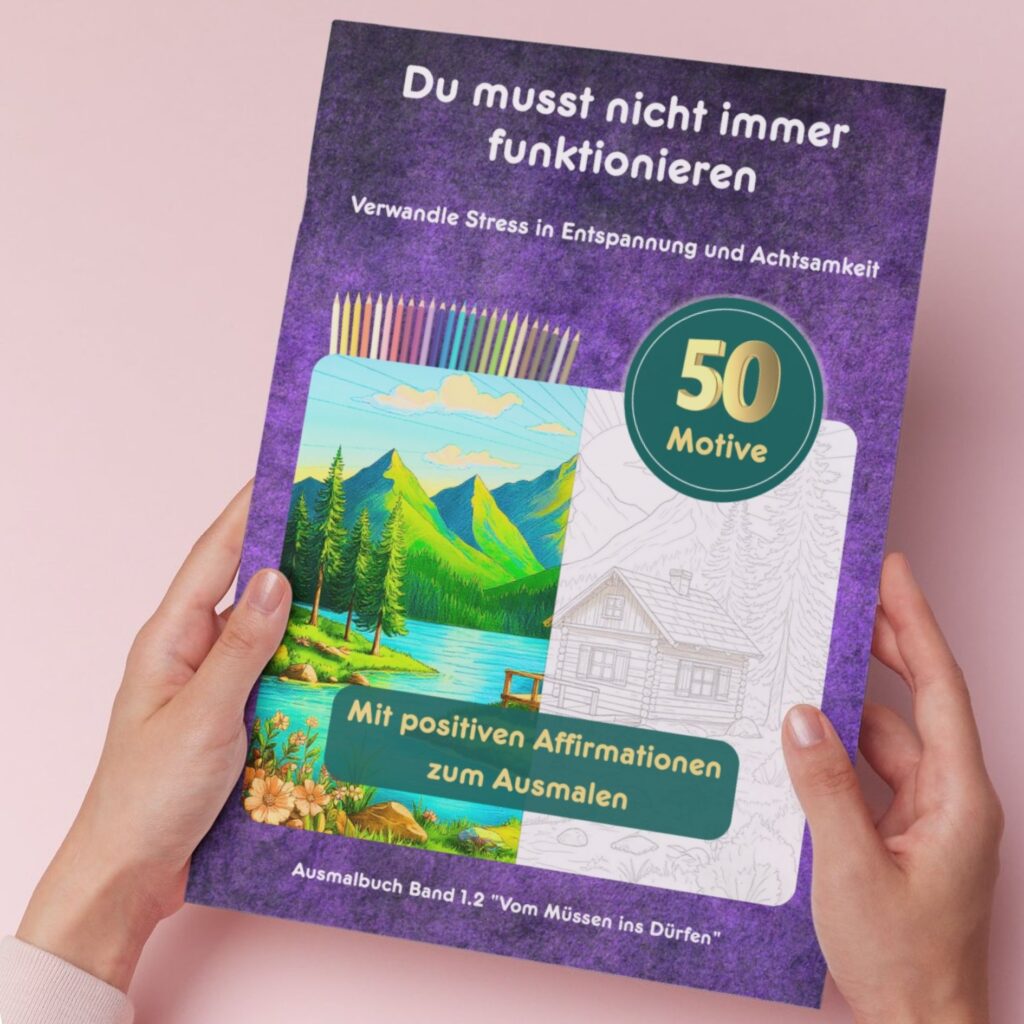
Reconnect with yourself and your inner strength. Our coloring book „"You don't always have to function."“ transformative Stress in conscious rest phases. Especially for women who want to move from obligation to freedom. Each of the 50 lovingly designed motifs features a positive affirmation tied together.
About the following Amazon link You can view and order it here:
https://www.amazon.de/gp/product/B0FRYVZZG4?ref_=dbs_m_mng_rwt_calw_tpbk_1&storeType=ebooks
It's time to leave old habits behind! Learn to set healthy boundaries – without any guilt. Click on the following link: https://fidertas-awareness.com/liebevoll-grenzen-setzen-lernen/
Why do so many women find it so hard to say "no"? Often it's due to the fear of disappointing others or deeply ingrained feelings of guilt. You should work on that, to function less for others and more life. Healthy egoism is positive!
Women, in particular, tend to put their well-being last because they struggle to say "no." But this is precisely what leads to feeling drained and overwhelmed. If you can't set boundaries, you lose control of your own life.
Saying no saves your energy for things that really matter.
It's about recognizing what's good for you and what isn't, and acting accordingly. To draw red lines It helps you stay balanced when something is draining your energy. This allows you to let go of unhealthy obligations and create space for what is truly important to you.
Feel free to leave a comment and share your experiences. How do you set boundaries? Do you have any tips and tricks that can help other women?
Your Julia
Disclaimer: This text is for informational purposes only. If you are experiencing trauma, please seek advice from an expert (e.g., a therapist, counselor, or other professional). Therapists).
All images and 3D elements used in this post are from Envato Elements and are used under a valid license.
KeywordsSaying no without guilt, not being able to say no, not being able to set boundaries, setting boundaries psychology, don't say yes when you want to say no, setting healthy boundaries, setting boundaries, saying no, setting clear boundaries, why can't I set boundaries?.
Sources / Links (without Wikipedia)
Beck-Cobaugh, H. (n.d.). Saying no is particularly difficult for women.. Heike Cobaugh – Your hospital conflict coach. https://www.cobaugh.de/1001-nein-sagen-faellt-besonders-frauen-schwer.html
Becker, P. Dr. F. (nd). Setting boundaries – saying no with confidence. – German Society for Economic Psychology. https://wpgs.de/fachtexte/grenzen-setzen/
Practicing respecting boundaries. Saprea. (2023, September 18). https://saprea.org/de/heilen/heilapproche/einhalten-grenzen-ueben/
Dämon, K. (2014, August 29). Say no already!. Wirtschaftswoche. https://www.wiwo.de/erfolg/beruf/ja-sager-leben-gefaehrlich-sagen-sie-endlich-nein/10605866.html
Fischer, J. (2024, June 2). „"People Pleasing": Why women are particularly often harmony-seeking. ELLE. https://www.elle.de/female-empowerment-frauen-people-pleaser
Köpp, P. (2022, December 9). Those who want to be polite say yes to everything. Those who want to be happy set boundaries.. Esquire. https://www.esquire.de/news/gesellschaft/borne-limits-fuer-ein-glueckliches-leben-wie-es-gehen
Laura. (2021, March 29). 10 signs that you're addicted to harmony. Life Idealists. https://www.lebensidealisten.de/blog/10-anzeichen-dafuer-dass-du-harmoniesuechtig-bist/
Müller, C. (2024, October 24). Don't be such a baby!. Spectrum of Science. https://www.spektrum.de/kolumne/grenzen-beim-sex-nein-zu-sagen-ist-wichtig/2238237
Plesser, F. (2021, August 19). What your boundaries have to do with self-love. THE COACHING LESSON. https://www.diecoachingstunde.de/was-deine-borne-mit-selbstliebe-zu-tun-haben/
Reiner, E. (nd). Saying no strengthens self-confidence. vivida bkk. https://magazin.vividabkk.de/conscious-leben/neinsagen
Strugin, N. (2020, August 4). Setting boundaries: Why we women sometimes find this difficult. Nicole Strubin. https://nicolestruebin.ch/kommen_stellen/
Wangermann, I. (2022, September 1). What are healthy boundaries – and why are they important for women?. Iris Wangerman. https://iris-wangermann.de/gesunde-borne-stellen/
Wardetzki, B. (nd). A craving for recognition – what's behind it?. Meaning Seeker. https://www.sinnsucher.de/blog/sucht-nach-anerkennung-was-steckt-dahinter
What limits can be crossed?. Was geht zu weit. (n.d.). https://www.was-geht-zu-weit.de/grenzen/welche-grenzen-koennen-ueberschritten-werden#:~:text=Deine%20Grenzen%20können%20auf%20unterschiedliche,kann%20ganz%20unterschiedliche%20stark%20ausfallen.

Mental & Mindset Coaching

Find serenity and inner peace: Hobbies for adult women that relax and inspire!

Emotional distance as protection? Have the courage to show vulnerability – you'll still be a strong mother!
Why is it so hard for us women to say "no" without feeling guilty? Even a river needs banks!
TAKE ADVANTAGE OF OUR FREE TIPS AND INSPIRATION!
THEN PLEASE SUBSCRIBE TO OUR NEWSLETTER

E-book
„"THE POWER OF CHANGE"“

The free e-book "The Power of Change: 5 Strategies to Successfully Replace Negative Habits" is a valuable tool that will help you identify negative habits and replace them with positive behavior.