

Authors: Julia Blömer & Dr. Steffen Blömer
Published on:
Updated on:
Short version:
Typical thought patterns and self-talk:
Certain behaviors can show why you keep falling into the same patterns that fuel your inner critic:
7 strategies to calm your inner critic:
If you need support, please feel free to sign up for a free initial consultation on. Or just look in our shop, to see if there's something suitable for you.

Jana had, as so often, done excellent work for the client. Her colleague Laura He still found something to criticize, though:
„"Why didn't you add the current status of the project work to the table?"“, she asked with a critical smile.
„"We always want to offer the customer the best quality."“, added Laura in addition.
Jana She felt insecure and doubted herself. Despite all her efforts, it never seemed good enough for her colleague. The client, however, had always been very satisfied with Jana's work.
Her inner critic grew louder, making her more insecure every day. It was like a shadow she couldn't shake off…
Women are more critical of themselves.
The International University of Applied Sciences Bad Honnef/Bonn has found, that women often assess their abilities and strengths more negatively than is the case in their immediate professional environment.
Uncertainty from the past
self-doubt and emotional blocks These negative voices are a common problem that often begins in childhood. They become deeply ingrained in our consciousness, constantly whispering to us that we are not good enough.
This often results in low self-esteem and inner insecurity, which severely restricts us in everyday life.
Difficulty dealing with criticism
Have you ever wondered why you so intimidated by criticism How do you feel? Why do you constantly feel like you're not living up to others' expectations?
„"Inner peace begins when you decide to no longer give your thoughts power over you."“ - Unknown
In this blog post, you'll learn how to recognize and calm your inner critic. We'll explore the... Causes of self-doubt and show you how you can boost your self-confidence.
Everyone has an inner "nonsense". The inner critic is the voice in your head that constantly questions and criticizes you.
In part, our inner critic wants to protect us by preventing potential mistakes and mishaps. It ensures that we prepare well and carefully consider our decisions.
It usually arises from early childhood experiences and social influences. Unfortunately, this voice sometimes absorbs the (subjective) opinions of others and makes them your own.
Profession
partnership
Private environment and leisure
Who is particularly vulnerable?
Women with low self-esteem Those with low self-confidence are susceptible to their inner critic. They often condemn themselves and feel easily intimidated when faced with criticism.
These self-doubts and the pressure to constantly be perfect drain your energy. Instead of fostering your strengths and talents, the negative spiral of thoughts leads you further and further down.
Constructive criticism It is specific and solution-oriented. It aims to build on your strengths or improve on your weaknesses.
Destructive criticism, on the other hand, is nonspecific and negative. It makes you insecure and can shake your self-image.
Criticism as an opportunity
See criticism as an opportunity for growth. Every mistake and every piece of feedback offers you learning opportunities. Your inner critic may be loud, but it's okay to make mistakes and learn from them.
When you receive feedback, don't immediately become defensive. Take a deep breath and listen actively. Ask for specific examples and suggestions for improvement.
This way you can avoid feeling intimidated and use the feedback for your growth.
Profession: You're receiving critical feedback on your presentation. Instead of feeling insecure, ask for specific points for improvement. Then practice those points for your next presentation.
Partnership: If your partner says: „"You never really listen to me."“, Don't react defensively. Instead, respond: „"Please give me an example."“ This way you can adjust your behavior and strengthen the relationship.
Treat criticism like a mirror. It shows you areas you might not have noticed. A mirror helps you see yourself better and understand where you can improve.
Your Character traits They determine how you behave. Often we are not aware of this. Every person has "opposing" poles within them.
The stronger our tendency towards one side of the facets, the more extreme our behavior will be in similar situations.
Situation: Presentation of an important project to the management team
Anna prepares thoroughly for her presentation and feels confident in her knowledge and skills. Her high level of competence is reflected in her poised demeanor.
She speaks clearly and confidently, answers questions precisely, and remains calm under pressure. Anna uses visual aids effectively and connects her points eloquently.
The management team is impressed by their professionalism and expertise.
Maria feels insecure and doubts her abilities, even though she is thoroughly prepared. Her low self-perception is reflected in her hesitant demeanor.
She speaks softly and avoids eye contact. When asked questions, she becomes nervous and has difficulty formulating her answers clearly and precisely. She uses visual aids sparingly for fear of making mistakes.
As a result, Maria appears less convincing and the management team doubts her competence, even though her content is technically correct.
Situation: Discussion about vacation planning with partner
Lisa reacts quickly and intensely to suggestions or criticism and can easily get into heated arguments. When her partner suggests going to the mountains, even though Lisa loves the beach, she immediately feels provoked.
Lisa lets her emotions guide her, which leads to the discussion becoming unpleasant and heated.
Alina remains calm and composed during discussions, even when disagreements arise. Her low irritability allows her to keep a clear head and present rational arguments, even in heated moments.
She doesn't let negative emotions get the better of her and looks for a constructive solution. Her relaxed nature allows her to find a healthy compromise between mountain hikes and relaxing on the beach.
Situation: Failure to achieve goals in an important project
Leonie is responsible for an important project and has discovered that the set goals have not been met. This situation hits her hard, and she immediately begins to blame herself. She questions her abilities and is plagued by self-doubt.
The feelings of failure haunt her and negatively affect her mood for days. Because of these negative emotions, Leonie avoids future tasks to prevent experiencing similar disappointments again.
Tanja is leading a project where the team has not achieved its set goals. Although she is initially disappointed, she does not let it have a lasting negative impact on her.
Tanja objectively analyzes the reasons for the failure. She tries to learn from it without completely questioning herself.
She maintains a positive attitude and can quickly refocus on new tasks. She sees setbacks as opportunities for improvement and remains optimistic.
Use these questions to better understand yourself and improve how you deal with criticism.
We used to often think: „"That's just me!"“ or „"That's just how he/she is!"“
It took some time to understand that only a good understanding of ourselves can help us change our behavior. Personality analyses give us valuable insights into our character traits and how we react in different situations.
We have learned to rethink our reactions to constructive criticism and to actively work on ourselves. As a result, we have become better at seeing criticism as an opportunity for personal development.
We often ask ourselves the following question: „"Does someone point out weaknesses in our behavior? Do we want to accept the gift?"“
Each of us has our own behavioral patterns, shaped by experiences and upbringing. But you too can recognize these patterns and Dissolving negative beliefs.
Your inner critic will become quieter over time the more often you reflect on how you usually act and react. This allows you to consciously decide to act differently in the future and maintain a positive attitude.
To quiet your inner critic, consciously control your thoughts. Recognize irrational thoughts and self-talk. Write down negative things about yourself and check if they are actually true. You will find that many of these thoughts are unfounded.
Breaking negative thought patterns
Write down your thoughts and emotions regularly. This will help you recognize patterns and address them effectively. Check their accuracy and rephrase them positively.
Ask yourself: „"Is that really true?"“ or „"What advice would I give a friend?"“
Shadow work
Actively recognize and integrate the The shadow side of your personality. Accept and love all parts of yourself, even those you have previously rejected. This "shadow work" helps you gain a more complete picture of yourself and reduce self-doubt.
Accept yourself Accept yourself with all your strengths and weaknesses. Accept your inner criticism with love, instead of fighting it. Fighting it only leads to more inner insecurity and a lack of self-esteem.
Strengthen your self-esteem through positive affirmations. Acknowledge your small successes every day.
Take small steps to achieve self-acceptance and Self-discovery Practice this. Every day, write down four things you appreciate about yourself. Reflect on your progress and be patient with yourself.
Routines for more self-acceptance and self-love
Rituals and routines are like watering a plant. Daily care makes it grow and thrive. Yours needs the same. self-love daily attention.
Reflection questions
Give your inner critic a look and a funny name. How about:
By personifying your critical inner voice, you take away its power and can laugh at its objections.
Ask yourself: „"What if I actually succeed?"“ or „"What if my boss really appreciates me?"“
These positive scenarios will help you overcome inner insecurity and strengthen your self-esteem.
Take a mental journey into the future and meet your future self. This future "you" has already left the inner critic behind.
Ask for tips on how to become more relaxed and build inner strength. Write down scenes in which you easily overcome obstacles and lovingly embrace your inner critic.

Recognize the importance of team roles and understand, how others see you. External perception plays a major role in greater self-acceptance and self-control.
If you want to delve deeper into this topic, feel free to check out our Courses on career and profession to: https://fidertas-awareness.com/raus-aus-der-blase-rein-in-dein-leben/
Actively seek constructive criticism and view it as a valuable opportunity for growth. By asking for feedback, you gain important insights that help you better recognize your strengths.
And at the same time, you will identify areas where you can still grow.
Develop your skills and competencies in a targeted way to calm your inner critic.
Improve your conflict resolution skills. Learn to deal with differences constructively. Practice communicating clearly and calmly. This will reduce your insecurity and boost your self-esteem. It can also help if you... Techniques of verbal self-defense you learn.
Contribute to a positive team atmosphere. Support your colleagues and be open to their suggestions. Your self-esteem will be boosted through strong teamwork.
Regularly reflect on your experiences. Consider what went well and where you can improve. This self-reflection strengthens your self-awareness and calms your inner critic.
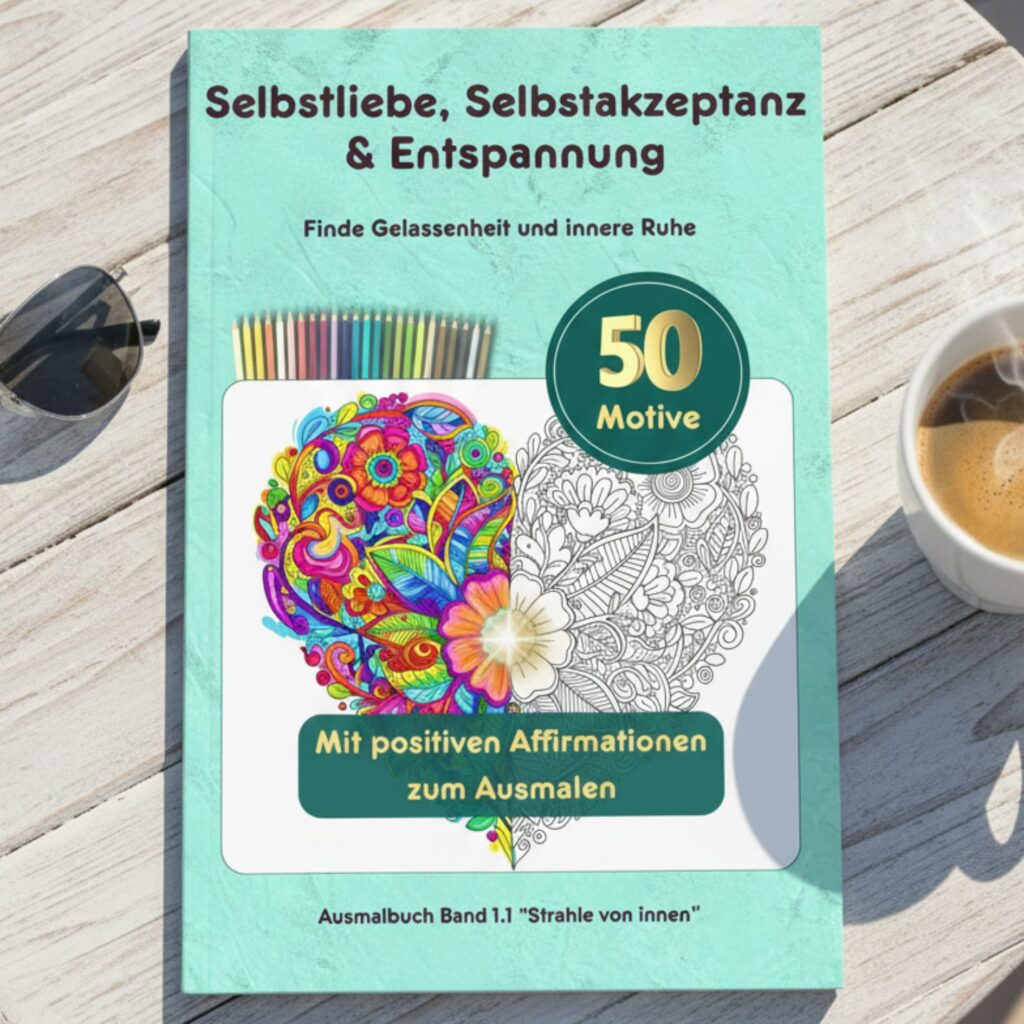
Reconnect with yourself and your inner strength. Our coloring book „"Self-love, self-acceptance & relaxation"“ It invites you to let go of stress and discover a little self-love every day. Each of the 50 lovingly designed motifs is accompanied by a positive affirmation tied together.
About the following Amazon link You can view and order it here:
https://www.amazon.de/dp/B0FRM6S7M3?tag=operapc-def-sp-co2-de-21
Your inner critic It can cause intense inner insecurity and low self-esteem. However, conscious reflection and targeted exercises can help to calm it down.
You have been given helpful insights to understand and overcome your self-doubt and insecurity.
„"We are what we think. All that we are arises from our thoughts. With our thoughts, we shape the world."“ – Buddha
Every step you take brings you closer to more self-acceptance and more self-efficacy. Don't let low self-esteem get you down.
Just keep working on yourself and learn to handle criticism better. That way you'll become more self-confident and You gain inner self-confidence!
Share your experiences with your inner critic in the comments.
What strategies helped you calm him down?
Your journey from self-doubt to self-love begins now. You have the ability to turn your life around for the better!
Your Julia & your Steffen
Disclaimer: This text is for informational purposes only. If you are experiencing trauma, please seek advice from an expert (e.g., a therapist, counselor, or other professional). Therapists).
All images and 3D elements used in this post are from Envato Elements and are used under a valid license.
KeywordsInner critic, self-doubt: Causes include childhood, inner insecurity, feeling insecure, doubting, low self-esteem, intimidated, dealing with criticism, negative thinking, taking everything personally; causes include low self-esteem in women, lack of self-confidence, learning self-acceptance.
Sources / Links (without Wikipedia)
Adamek, S. (2024, March 4). Inner critic: How to deal with it. Svenja Adamek online practice. https://svenja-adamek.de/stress/innerer-kritiker-so-gehst-du-mit-ihm-um/
Alicia. (2022, September 14). Teamwork at work – The most important tips. StudySmarter. https://www.studysmarter.de/magazine/teamarbeit-tipps/
Cremasco, J. (2019, August 25). Self-worth through self-acceptance. Julia Cremasco Coaching. https://www.cremasco.de/2019/08/25/selbstwert-durch-selbstakceptanz/
Elkersh, J. (2020, July 29). Young people want more female role models – here they are!. Startup scene. https://www.businessinsider.de/gruenderszene/business/rdrct-junge-gruenderinnen-vorbilder/
Everwin, N. (2018, March 22). Why we constantly compare ourselves to other women. desired. https://www.desired.de/lifestyle/warum-wir-uns-staendig-mit-anderen-frauen-vergleichen/
Frankfurter Rundschau. (2022, March 25). Self-doubt at work: How to silence your inner critic. Frankfurter Rundschau. https://www.fr.de/ratgeber/karriere/selbstzwei-im-job-den-inneren-kritiker-verstummen-lassen-zr-91434261.html
Harzheim, C. (2017, August 2). How can I react less sensitively?. Observer. https://www.beobachter.ch/gesundheit/psychologie/wie-reagiere-ich-weniger-sensibel-47569
Hoffner, N. (2023, March 2). Is the work of women worth less than that of men?. herCAREER. https://www.her-career.com/ist-die-arbeit-von-frauen-weniger-wert-als-die-von-maennern/#:~:text=Demnach%20verdienen%20Frauen%20im%20Durchschnitt,Ausbildungsniveau%20und%20vergleichbare%20F%C3%BChrungsaufgaben%20haben.
Kegel, M. (2022, July 29). Becoming more self-confident: How can I boost my self-esteem?. evidero. https://www.evidero.de/selbstwert-machen-mit-uebungen
LINC. (2024, July 17). Big Five Personality Test. LINC. https://linc.de/lpp-persoenlichkeitstest-bigfive/
Maike, M. (2023, September 30). Impulses for new paths 3: The inner critic. Feinslieb. https://feinslieb.net/impulse-fuer-neue-wege-3-der-innere-kritiker/
Nassr, A. (2023, October 18). Cognitive restructuring: How to hack your mindset in 30 days. Mental well-being. https://mentalwohl.com/kognitive-restructuring-was-ist-das/
Puzzle Your Mind. (2023, October 10). Shadow work: Instructions & exercises for integrating your shadows. Puzzle Your Mind. https://www.puzzle-your-mind.de/shadowwork/
Völker-Cheung, C. (2021, January 1). Giving and receiving constructive criticism is a skill that needs to be learned – How does constructive criticism work?. CV. https://www.claudia-voelker.de/kritik-ueben-will-gelernt-sein-wie-funktioniert-kontürive-kritik-2/

Mental & Mindset Coaching

Personality & Career Profiler

Want to relieve inner tension? Reduce emotional and subconscious stress with anti-stress gifts for women!

Overbearing behavior in a partnership – How to talk about it, set boundaries, and when a separation makes sense.

25 questions and 18 impulses for self-discovery: How to regain more confidence in yourself!
TAKE ADVANTAGE OF OUR FREE TIPS AND INSPIRATION!
THEN PLEASE SUBSCRIBE TO OUR NEWSLETTER

E-book
„"THE POWER OF CHANGE"“

The free e-book "The Power of Change: 5 Strategies to Successfully Replace Negative Habits" is a valuable tool that will help you identify negative habits and replace them with positive behavior.